Content syndication or intent data: which fits your funnel?
What content syndication and intent data each actually deliver, the funnel problem each one solves, and how to decide which your team should buy first.
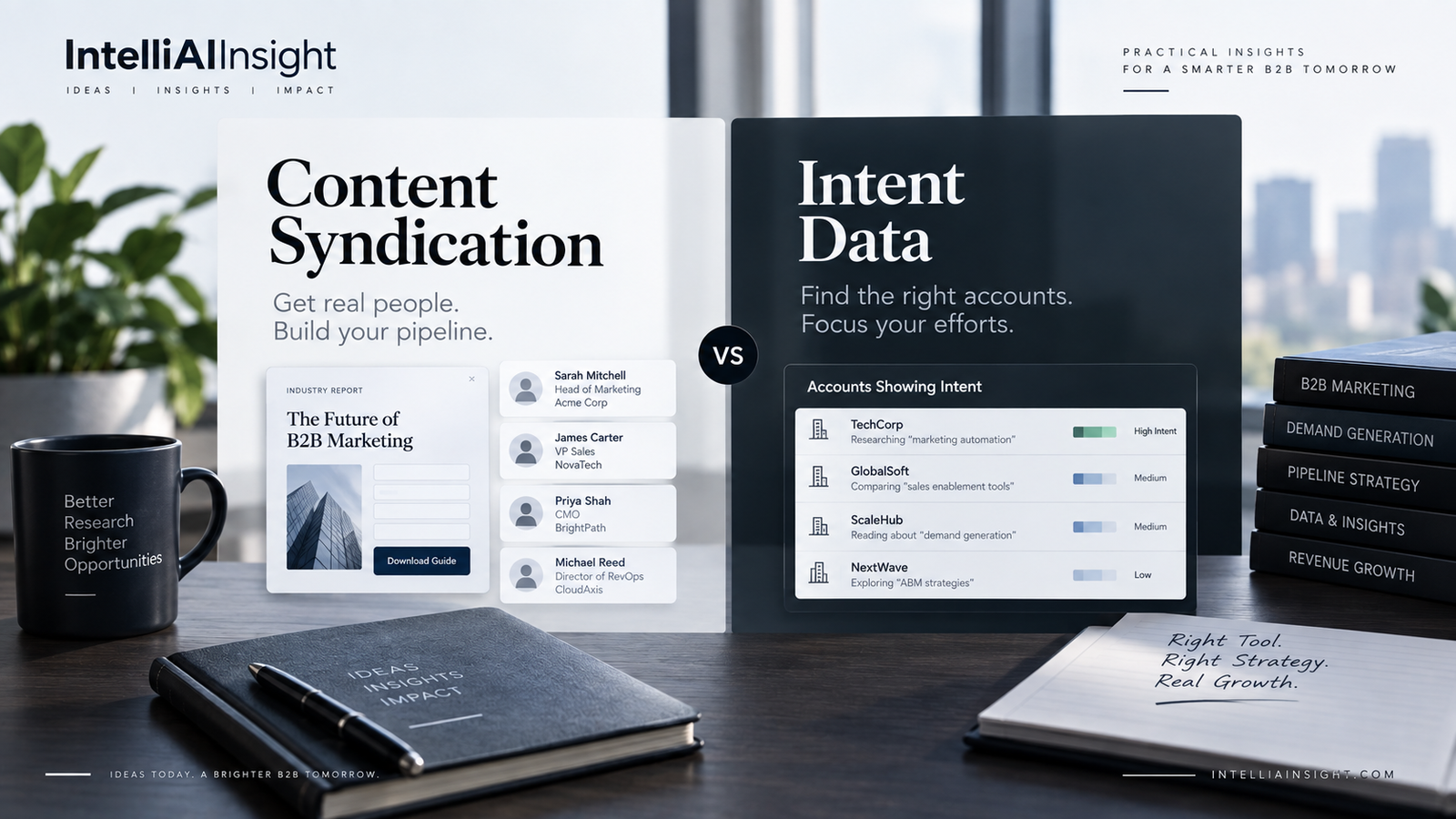
These two get compared because they appear in the same budget line and the same vendor conversations. They solve different problems, and buying the wrong one is an expensive way to find that out.
What each one actually delivers
Content syndication is paying a publisher or network to promote your content to their audience and hand you the contact details of people who download it. You get names, job titles, companies and email addresses, usually priced per lead.
Intent data is a signal that a company appears to be researching a topic. You get accounts and a topic, rarely a person and rarely a contact detail. It is priced as a subscription.
One gives you people to contact. The other gives you an order to work in. Nothing about them is interchangeable.
What problem is each one for?
Answer this honestly before looking at a vendor.
If you have nobody to talk to, syndication is the relevant tool. It puts contacts in your database who have at least engaged with a topic in your category.
If you have plenty of accounts and no idea which are warm, intent data is the relevant tool. It reorders a list you already have.
If your message does not work yet, neither will help. Syndication gives more people the chance to ignore it, and intent data changes the order in which they do.
That last case is more common than either vendor will suggest, and it is worth being blunt with yourself about it.
Content syndication: what to know before buying
The lead is early. Someone downloaded a guide about a topic. They did not ask to speak to you. Sending that contact straight to a salesperson with a demo request is the most reliable way to conclude that syndication does not work.
Quality varies enormously by supplier. Some networks genuinely promote your content to a relevant audience. Others incentivise downloads in ways that produce contacts with no interest at all. The difference is not visible in the proposal.
Ask how the leads are generated. Which sites, what the offer looked like, whether the person saw your brand at the point of download. If the answers are vague, that is the answer.
Agree the filters in writing. Job function, seniority, company size, industry, country. Then check the delivered leads against them, because leads outside the agreed profile are common and usually creditable if you raise them.
Plan the follow up before the first lead arrives. Nurture, not a sales call. A sequence that gives them more of what they downloaded, and a route to a conversation when they are ready. Leads that sit in a list for three weeks are worth nothing, however good they were.
Check the consent position. You are receiving personal data collected by someone else. Confirm what the person agreed to and that it covers contact from you, particularly for readers in Europe and the United Kingdom. Ask for the consent language and keep it. [VERIFY: source, consent requirements in your target markets]
Intent data: what to know before buying
It is company level. It tells you an organisation appears to be researching something. Who inside it, and why, is still your job.
It is an inference. The identification step matches a visitor to a company, and it is a guess that has become less accurate as more people work from home.
It lags. By the time a signal reaches your dashboard, some of those companies have a shortlist.
It only pays off with fast follow up. The value is in the first week or two. If signals land in a queue and get called three weeks later, you have bought a list of decisions already made.
Test it backwards. Ask a vendor to check whether the signal appeared before deals you have already won. If it was not there for your past wins, it is unlikely to find your next ones.
There is more detail on how these vendors build their data in our piece on what intent data is and whether it is worth paying for.
Side by side
| Content syndication | Intent data | |
|---|---|---|
| What you get | Contact records | Accounts and topics |
| Priced as | Per lead | Subscription |
| Fixes | An empty top of funnel | No way to prioritise accounts |
| Needs to work | A nurture sequence | Fast sales follow up |
| Fails when | Leads go straight to sales | Nobody opens the dashboard |
| Person level | Yes | Rarely |
| Consent risk | Real, check it | Lower, but ask about sources |
How to decide
Three questions.
What is the actual bottleneck? Not enough names, or too many names and no priority. Write down which, and pick the tool that matches it.
Can you follow up properly? Syndication needs a nurture sequence ready before the first lead. Intent data needs sales calling inside a week. If neither exists, build that first and buy nothing this quarter.
How will you know in ninety days whether it worked? Pick the measure before you sign. For syndication, something like the share of leads that reach a real conversation. For intent data, whether flagged accounts convert at a better rate than the rest of the list. A vendor's dashboard reporting engagement is not evidence.
The cheaper thing to try first
Before either, use what you already have.
Your own site analytics show which companies come back repeatedly. Your CRM has closed lost deals from a year ago, which are often warmer than anything you can buy. Free public signals such as hiring, funding and leadership changes are real events rather than inferences.
If you have worked through all of that and the bottleneck is still there, you now know exactly which of these two you are buying and why. That is a much better position to negotiate from than walking into a demo with a budget and no diagnosis.
Common questions
Which should a small team buy first?
Neither, until outbound or inbound is working at a small scale. Once something works, buy the one that fixes your actual bottleneck. Not enough names means syndication. Too many names and no priority means intent data.
Are syndicated leads lower quality than inbound?
They are earlier. Someone who downloaded a guide through a publisher has shown interest in a topic, not in you. Treat them as top of funnel and design the follow up accordingly, rather than sending them straight to a salesperson expecting a demo.
Can you use both?
Yes, and they combine well. Syndication generates the contacts, intent data suggests which of those accounts to prioritise. That only pays off once you have enough volume for prioritisation to matter.
Link to this article
Writing about this? Copy the address, or the ready made link.
Get new stories by email
Join the list and be first to get our best stories when the newsletter starts. One click to unsubscribe.
Comments
No comments yet. Add the first one.